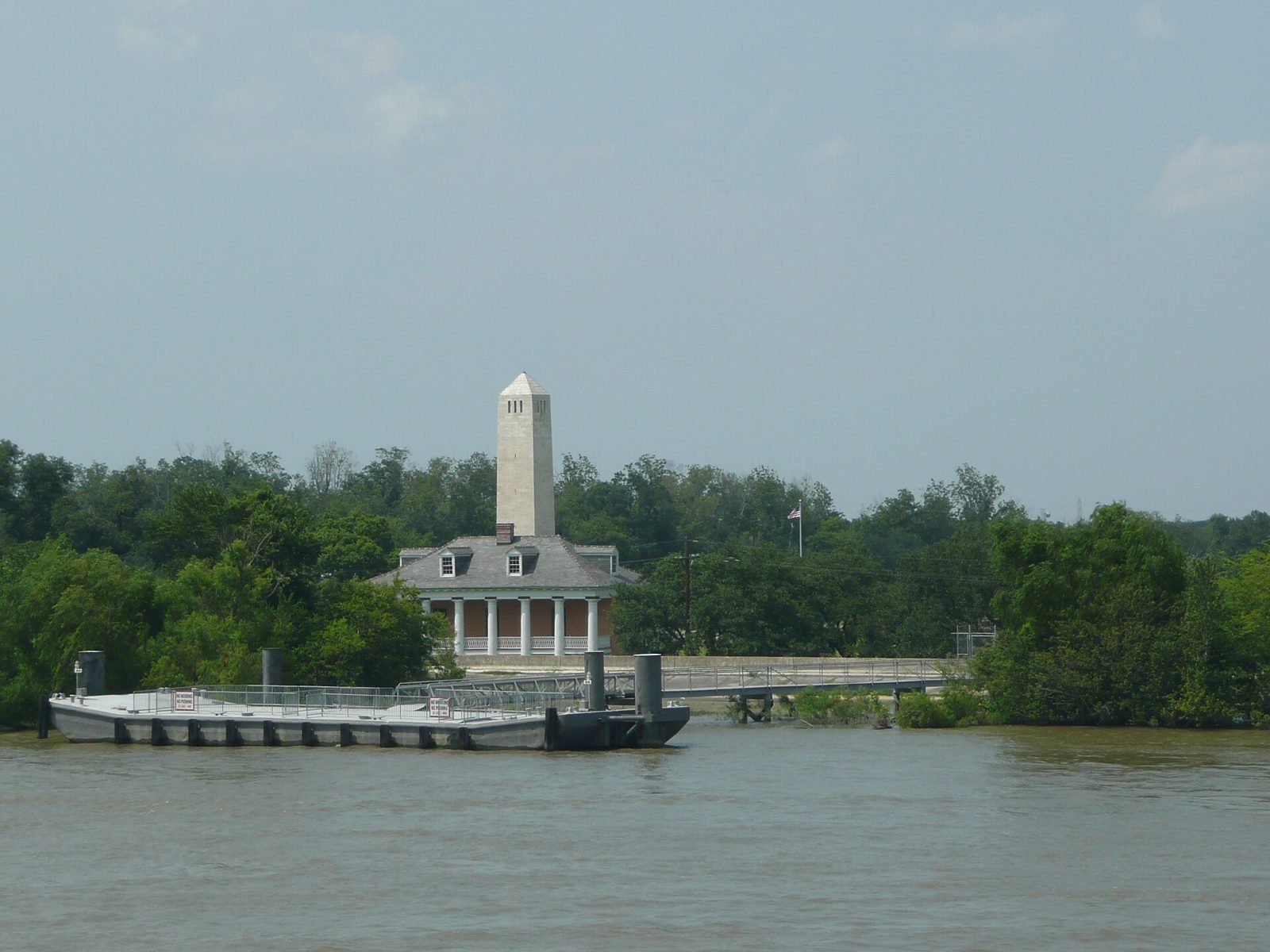

On a quiet morning Chalmette Battlefield looks like a wide field by the river with a white monument in the middle. Two hundred years ago it was the place where the last big battle of the War of 1812 was fought, and won, in about two hours. Once you know what happened here, you'll see the field differently.
It's in Chalmette, six miles downriver from the French Quarter, and it's part of Jean Lafitte National Historical Park and Preserve. There's no entrance fee.
The Battle of New Orleans
By December 1814 the United States and Britain had been at war for two and a half years. A British army of veterans landed below New Orleans to take the city and, with it, control of the Mississippi. Major General Andrew Jackson pulled together whoever he could find: U.S. Army regulars, Tennessee and Kentucky riflemen, Louisiana militia, battalions of free men of color, Choctaw warriors, and Jean Lafitte's Baratarian privateers.
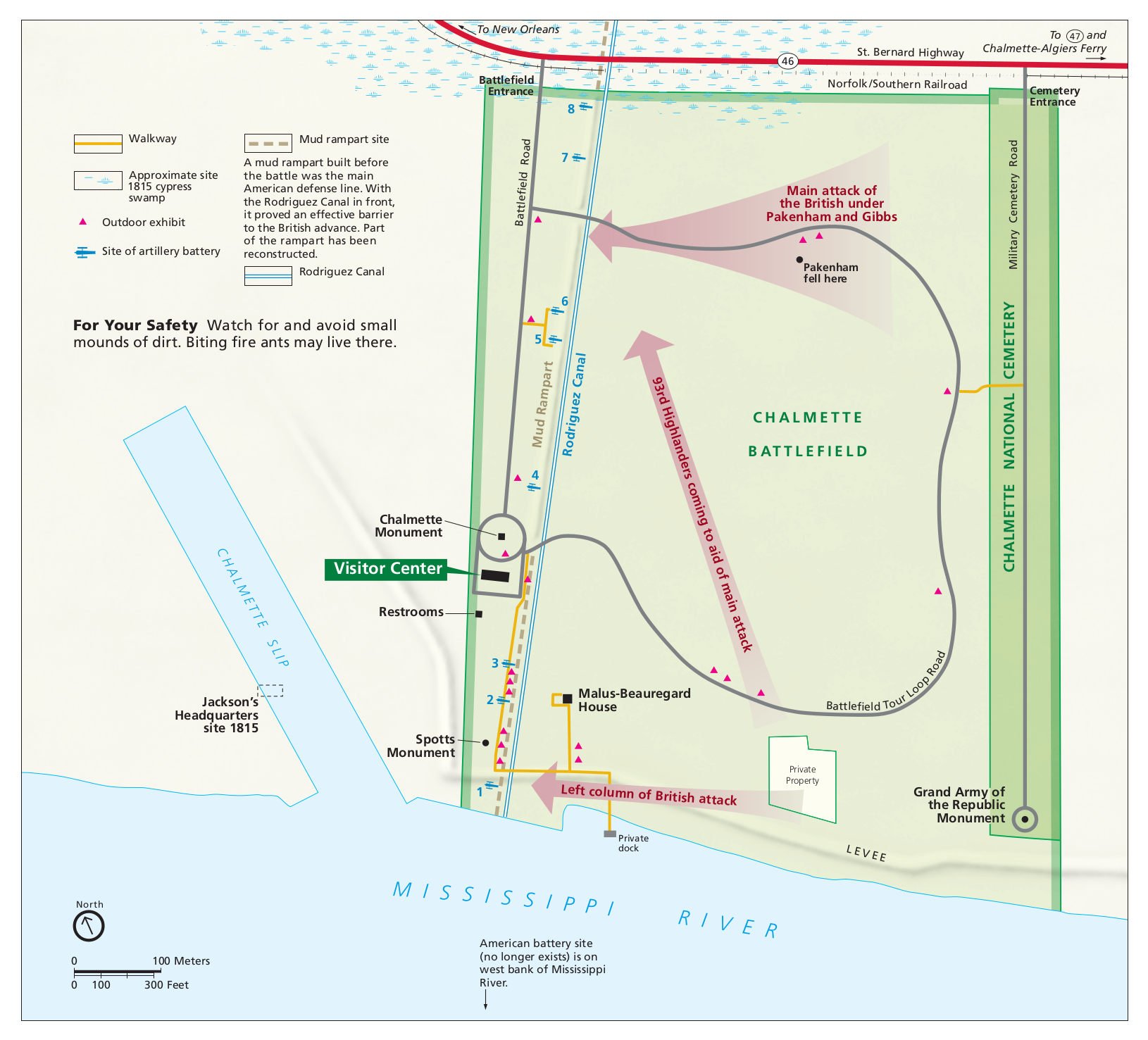
The fighting started weeks before the famous day. On the night of December 23 Jackson struck the British camp downriver in the dark. On New Year's Day the two armies traded cannon fire for hours. All the while, Jackson's men were digging in here, behind an old millrace called the Rodriguez Canal, and piling up a mud rampart that ran from the river to the cypress swamp.
On the morning of January 8, 1815, about 5,400 British soldiers attacked across the open cane fields toward roughly 4,000 Americans behind that line. Things went wrong for the British from the start. The ladders and bundles of cane they needed to cross the canal and climb the rampart were left behind, and the main column marched straight into American cannon and rifle fire. It broke in about 25 minutes. The British commander, Sir Edward Pakenham, was killed, General Gibbs was mortally wounded, and General Keane was badly wounded. Across the river on the west bank, a British force did push back the Americans there, but it didn't matter: the main army had been shot to pieces.
The infantry fight lasted no more than two hours. British losses were around 2,000 killed, wounded and missing. On Jackson's line, the Park Service counts 7 Americans killed and 6 wounded.
The famous twist: a peace treaty had already been signed in Ghent, in what's now Belgium, on Christmas Eve. News crossed the Atlantic slowly, and the war wasn't officially over until weeks later. The battle still made Jackson a national hero, and eventually president.
What you're looking at
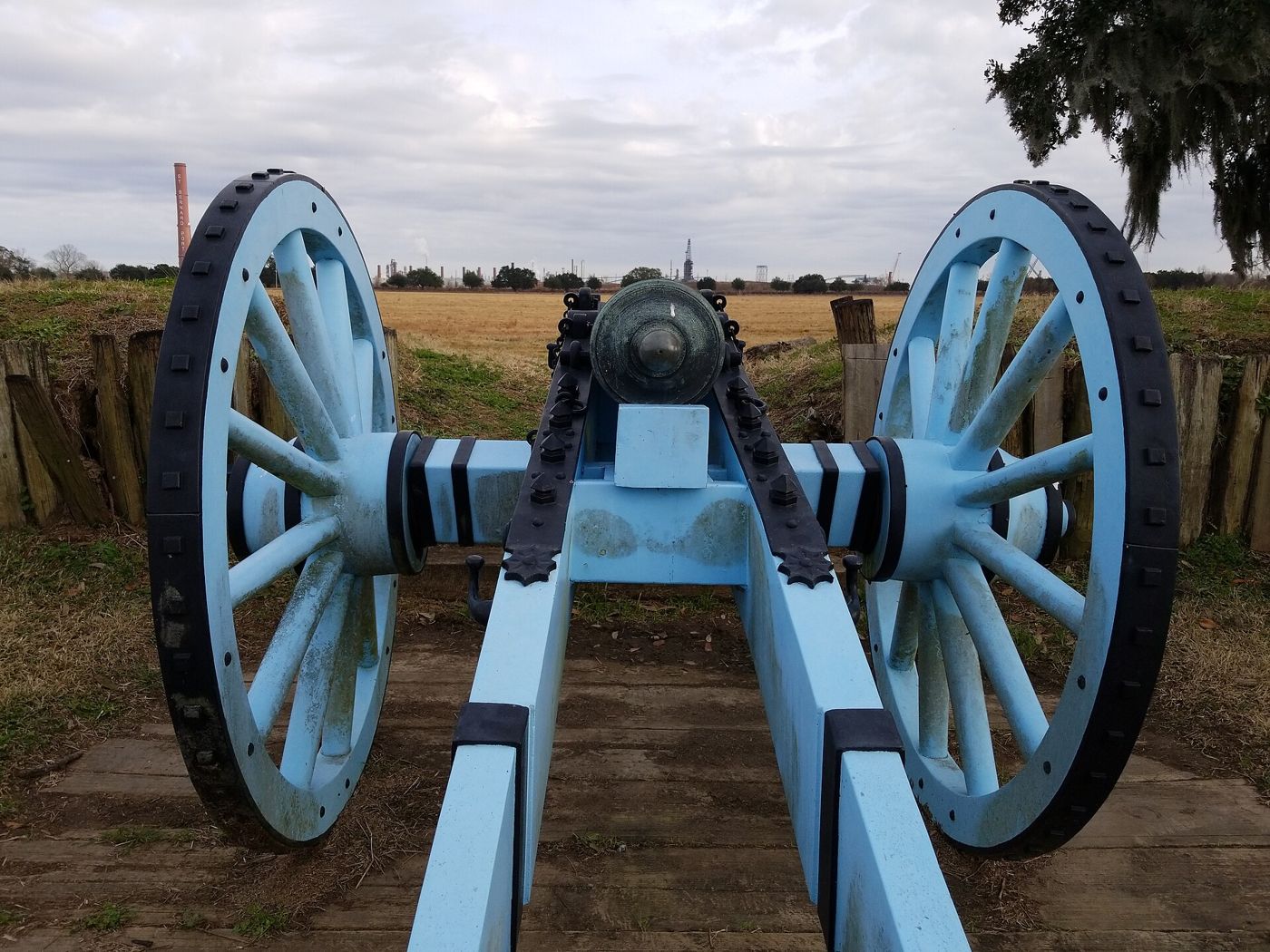
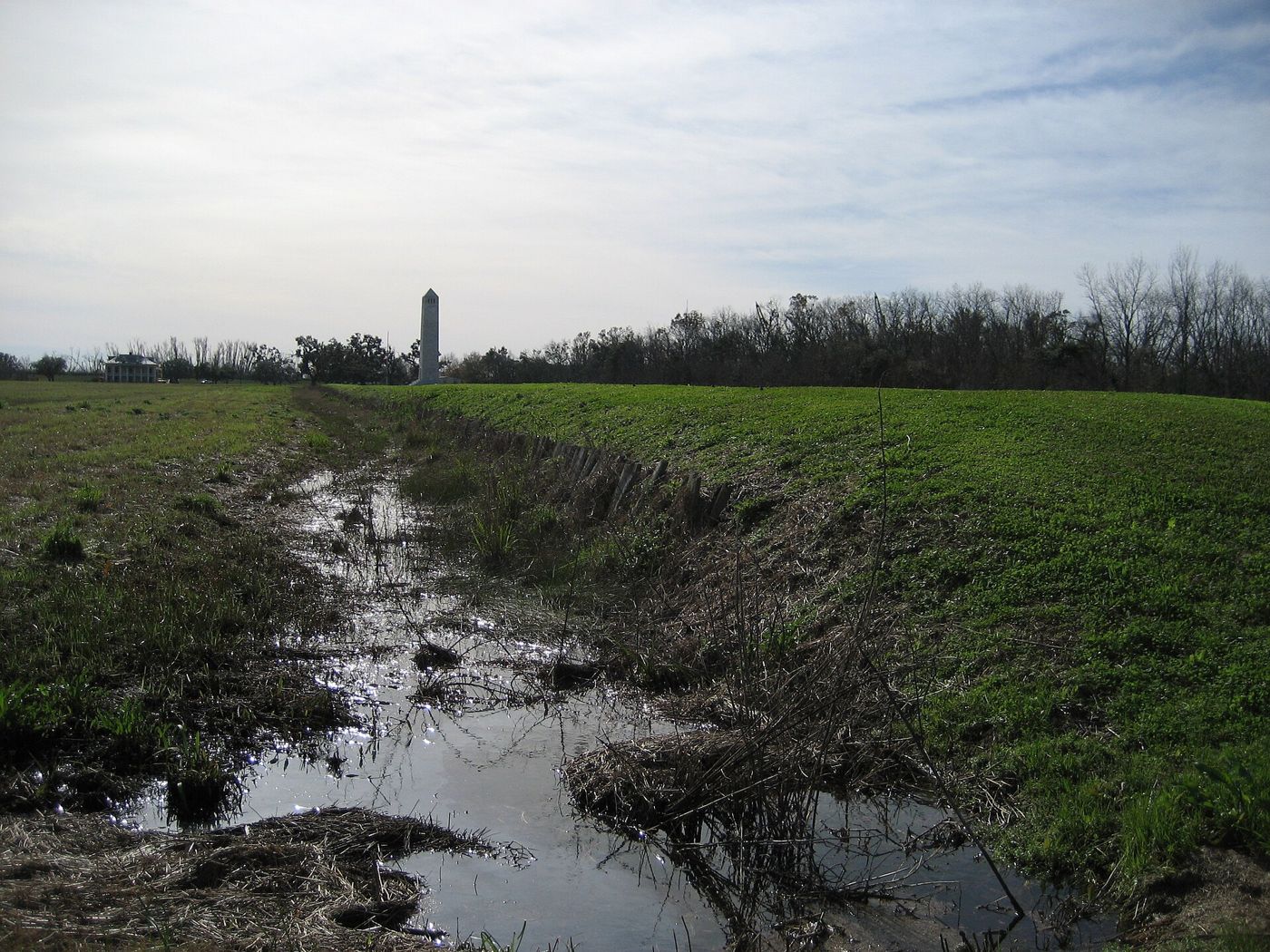
The American line. A rebuilt section of the earthworks and the shallow ditch of the old Rodriguez Canal run from the river toward the trees, with cannons placed along it. Stand behind it and look out over the field the British crossed. It's long, flat and wide open, and that tells you most of what you need to know about how the battle went.
The Chalmette Monument. The obelisk, just over 100 feet tall, was started in the 1850s and finally finished in 1908. It's the landmark you can see from all over this end of the parish.
The Malus-Beauregard House. The white house by the river was built in 1832 and 1833, long after the battle, in the French Creole style, then remodeled in the Greek Revival style in 1856. It's named for two of the families who owned it. It isn't open to the public, but from outside it's the classic photo of the park.
Chalmette National Cemetery. Next door, through the gates at the end of the field, more than 15,000 American veterans are buried under the oaks, most of them Union soldiers from the Civil War. Our guide to Chalmette National Cemetery has its stories, including the soldier who was a woman.
The town on the battlefield
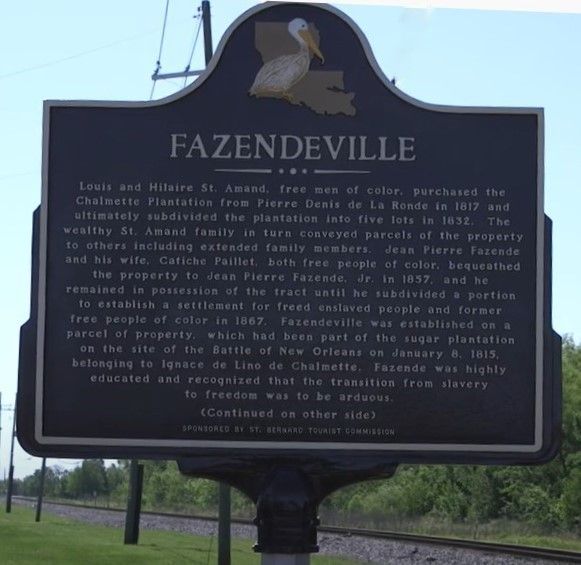
For about a hundred years there was a village on this field. After the Civil War, Jean Pierre Fazende, a free man of color and New Orleans grocer, divided the land into lots and sold them to free people of color and to formerly enslaved people from the area's plantations. The Park Service dates the community to 1867. It grew to more than 200 people, with a few dozen homes and two churches, and it came to be known as Fazendeville.
In the early 1960s, ahead of the battle's 150th anniversary in January 1965, the government decided to remove the village to bring the battlefield back to something like its 1815 appearance. The Park Service bought the land in the mid-1960s after long, contentious negotiations, and the homes were torn down. Many of the residents moved to New Orleans' 9th Ward and kept their community together through the years that followed. A historical marker at the battlefield entrance, dedicated in 2021, tells their story.
Planning your visit
- Start at the visitor center. Hurricane Katrina destroyed the old one in 2005; the new visitor center opened in late 2010. Its exhibits tell the whole story of the campaign in a short visit (audio-description devices are available), and the rangers are there to answer questions.
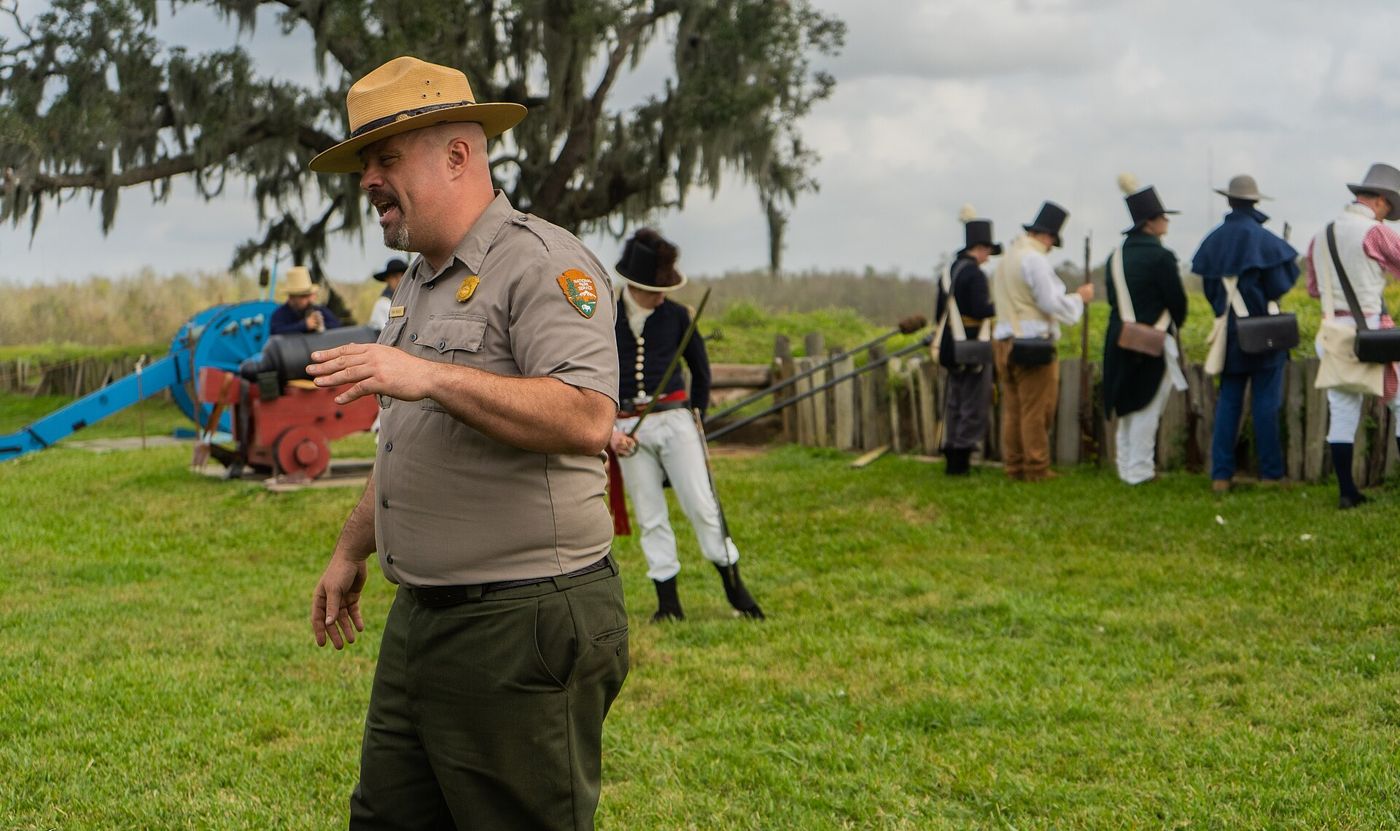
- Catch the ranger talk. The park's free talk on the Battle of New Orleans runs most days. Today's time, and any days off coming up, are in the box on this page.
- Walk or drive the loop. A tour road and paths connect the American line, the monument, the house and the river. Most people see it all in about an hour, longer with the cemetery.
- Climb the levee. The Mississippi is right behind the house. Watch for ships.
- When it's open. The gates for cars open in the morning and close in the late afternoon, and you can walk in from sunrise to sunset. The park's website has the current hours.
- Getting around. The fully accessible way to see the park is by car on the tour road. Leave metal detectors at home: they're banned on federal land.
- By boat. A paddlewheeler runs from the French Quarter down the river to the battlefield, if you'd rather arrive the way the river traffic did.
Every January
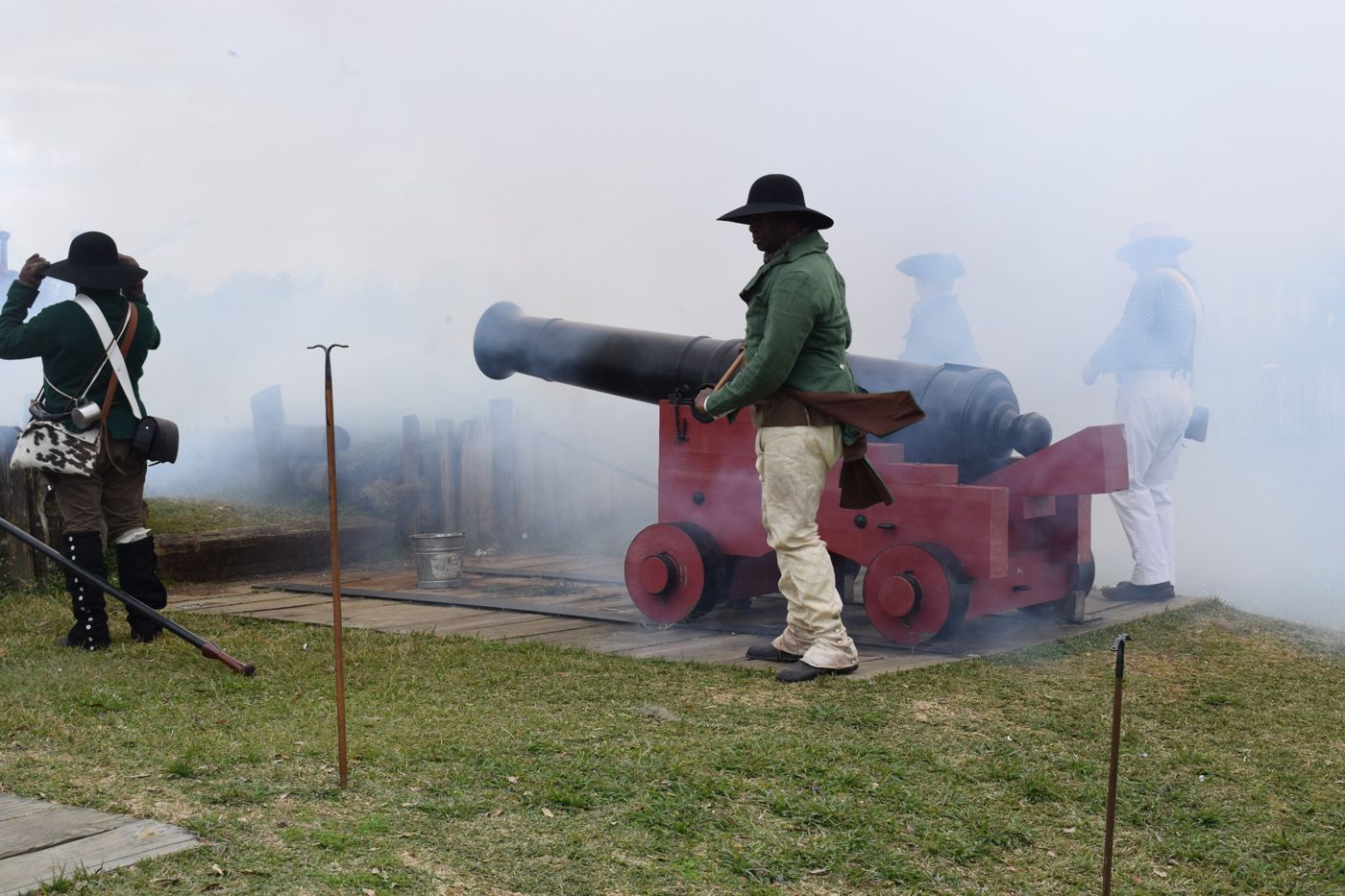
The anniversary of the battle, January 8, is the park's big weekend. It's usually marked with living-history camps, people in period uniforms, musket and cannon firing, and a commemoration ceremony. It's the best time to bring kids, and the best time to understand how close together these two armies really were. It'll be on what's on as soon as the park announces it.
Make a day of it
Pair the battlefield with the cemetery next door, then lunch in Chalmette and the drive down the San Bernardo Scenic Byway to the Isleño country and the marsh. Our day trip guide puts it all together.
Questions people ask
Is Chalmette Battlefield free?
Yes. There's no entrance fee for the battlefield, the visitor center, the ranger talk or the national cemetery next door.
What are Chalmette Battlefield's hours?
The gates for cars are open 9 AM to 4:30 PM, and you can walk in from sunrise to sunset. Hours can change for special events, so check the park's website before you go.
Where is Chalmette Battlefield?
On St. Bernard Highway in Chalmette, about six miles downriver from the French Quarter: take St. Claude Avenue through Arabi, where it becomes St. Bernard Highway.
How long do you need at Chalmette Battlefield?
About an hour for the visitor center, the line, the monument and the outside of the house; add half an hour for the national cemetery, and the ranger talk if it's on.
Is there a ranger talk?
Yes, a free talk on the Battle of New Orleans most days. Today's time, and any days off coming up, are in the box on this page.
What is the Battle of Chalmette?
Another name for the Battle of New Orleans, fought here on the Chalmette plantation on January 8, 1815. American troops under Andrew Jackson stopped a British army attacking toward New Orleans.
Who won the Battle of New Orleans?
The Americans, decisively. The British main attack broke in about 25 minutes, and their commander, Sir Edward Pakenham, was killed.
How many soldiers died in the Battle of New Orleans?
The British lost around 2,000 men killed, wounded and missing. On Jackson's line, the Park Service counts 7 Americans killed and 6 wounded.
Why was the Battle of New Orleans fought after the war ended?
A peace treaty had been signed in Ghent on Christmas Eve 1814, two weeks before the battle, but news crossed the Atlantic slowly and the war wasn't officially over until weeks later. Nobody here knew.
Who fought with Andrew Jackson at New Orleans?
Almost everyone he could find: U.S. Army regulars, Tennessee and Kentucky riflemen, Louisiana militia, battalions of free men of color, Choctaw warriors and Jean Lafitte's Baratarian privateers.
How tall is the Chalmette Monument, and can you climb it?
Just over 100 feet; it was started in the 1850s and finished in 1908. Visitors have climbed its spiral stairs in the past, but whether they're open changes, so ask at the visitor center.
Can you go inside the Malus-Beauregard House?
No, it isn't open to the public. The white house by the river was built in 1832 and 1833, long after the battle, and it's the classic photo of the park from outside.
What was Fazendeville?
An African American community on the battlefield, settled after the Civil War on lots that Jean Pierre Fazende, a free man of color, sold to free people of color and formerly enslaved people. It grew to more than 200 people. The government removed it in the mid-1960s, ahead of the battle's 150th anniversary, and many residents moved to New Orleans' 9th Ward. A historical marker at the entrance, dedicated in 2021, tells its story.
Is Chalmette National Cemetery part of the battlefield?
It's right next door, through the gates at the end of the field, and part of the same park visit. More than 15,000 American veterans are buried there, most of them Union soldiers from the Civil War. See our guide to the cemetery.
Can you get to Chalmette Battlefield by boat?
Yes: a paddlewheeler runs from the French Quarter down the river to the battlefield.