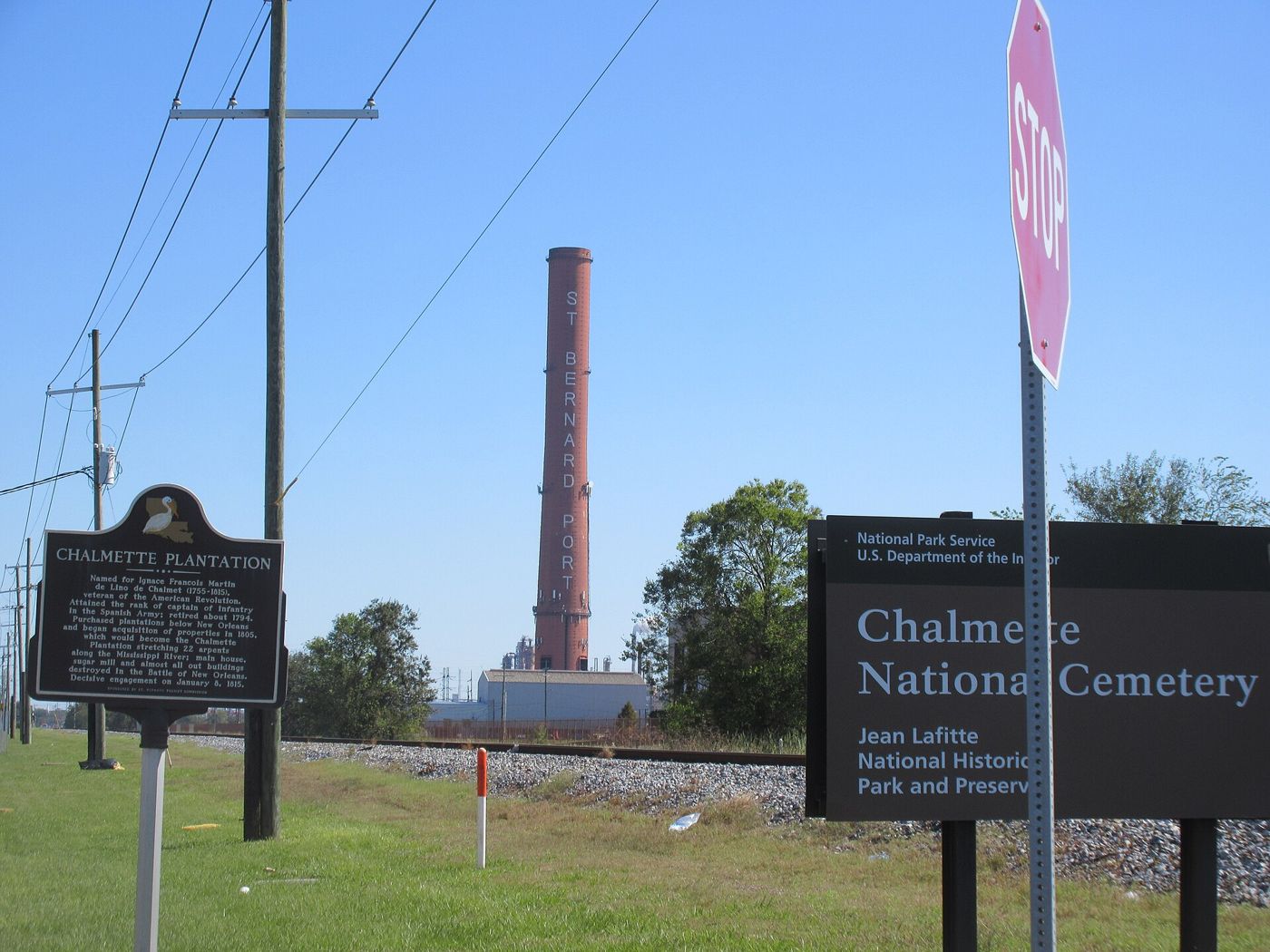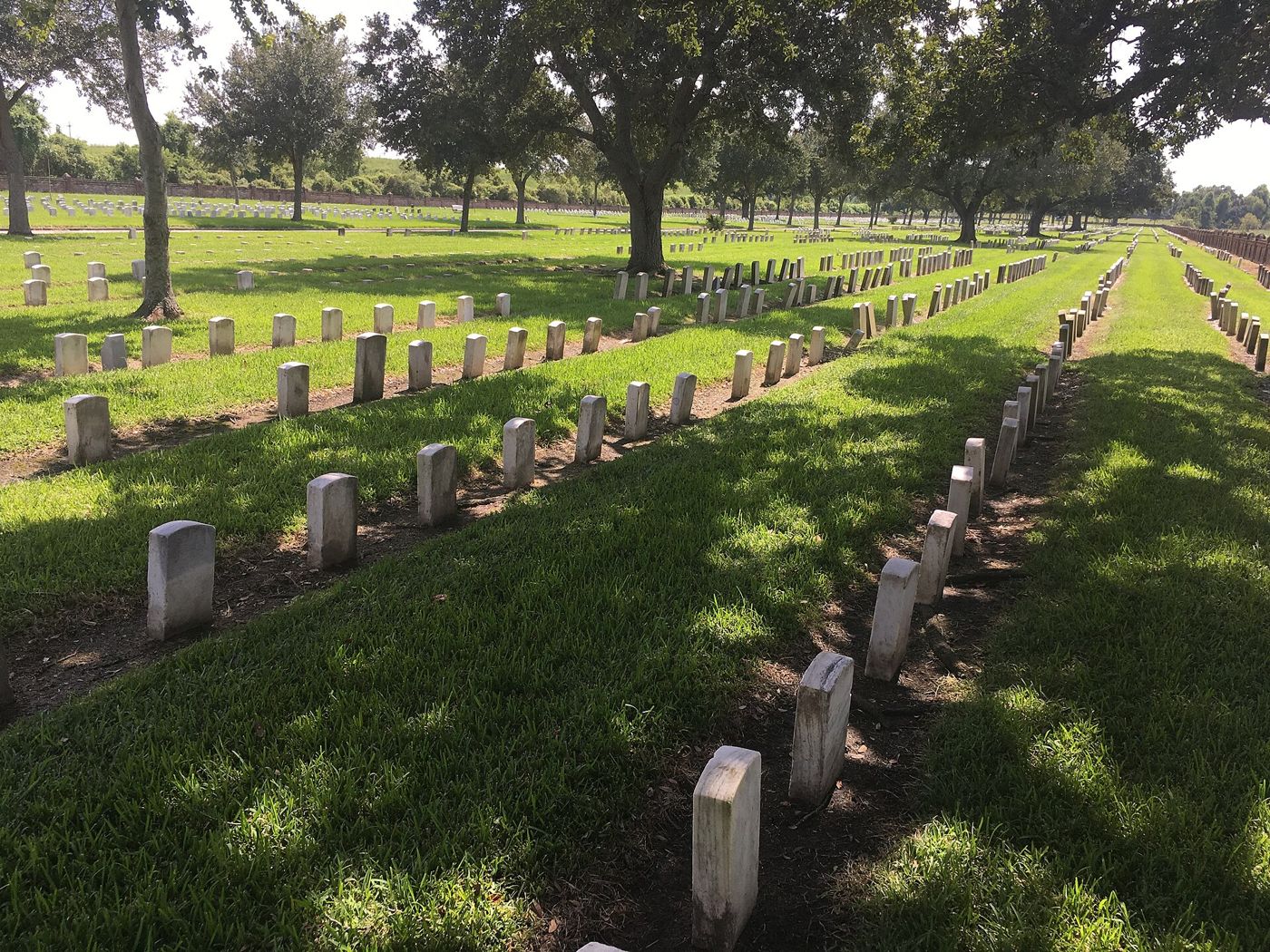

At the far end of Chalmette Battlefield, past the monument and the old plantation house, a brick wall closes off seventeen and a half acres of white headstones under live oaks. This is Chalmette National Cemetery, and more than 15,000 American veterans are buried here.
It's one of the quietest places in the parish, and it's free to walk.
A Civil War cemetery on an 1812 battlefield
The cemetery was started in May 1864, in the middle of the Civil War, as a burial ground for Union soldiers who died in Louisiana. Union-held New Orleans was full of army hospitals, and thousands of soldiers died of disease and wounds there. The army chose ground on the field where Andrew Jackson's army had beaten the British in 1815, which is why the cemetery and the battlefield sit side by side today.
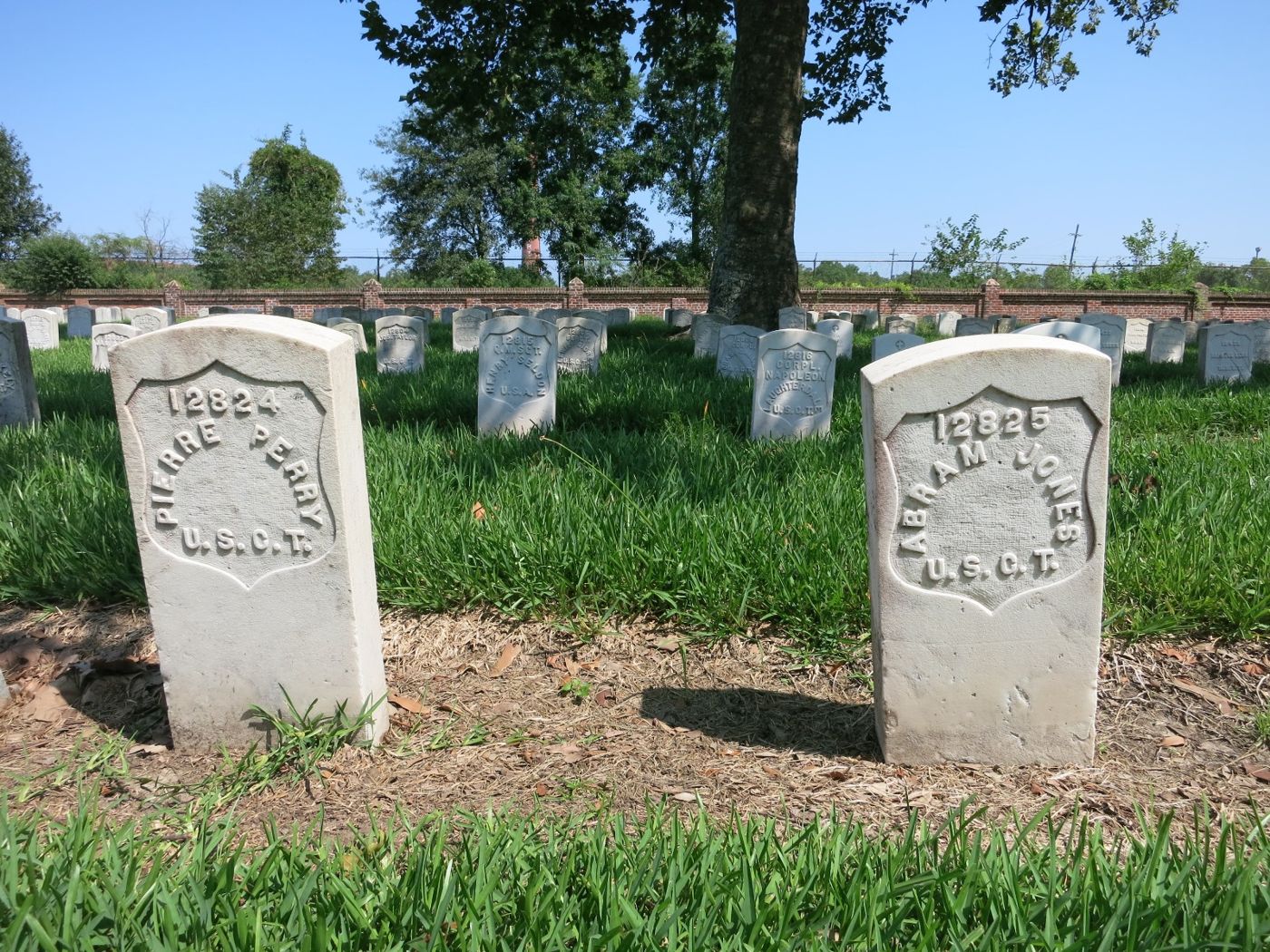
Most of the first graves were moved here. Until 1866 soldiers were brought from the hospital cemeteries around New Orleans, and in 1867 and 1868 more than 7,000 more were brought in from burial grounds across the region. Many could not be identified, and their stones carry only a number.
The War Department ran the cemetery until 1933, when it was handed to the National Park Service along with the battlefield. Today both are part of Jean Lafitte National Historical Park and Preserve.
Who's buried here
Most of the graves are Union soldiers from the Civil War, among them soldiers of the United States Colored Troops, the Black regiments that fought for the Union. After the war the cemetery took in veterans of later wars too: the Spanish-American War, both World Wars and Vietnam. It is closed to new burials now; there's no more room.
A few surprises:
- Only one veteran of the Battle of New Orleans is buried here. At least six veterans of the War of 1812 lie in the cemetery, but just one of them fought on this field. The British soldiers who died in the battle are not buried here, though one British seaman lies near the brick wall.
- The headstones don't all match, on purpose. Their shapes and sizes changed over 150 years of burials, and the park keeps them as they are.
- It is the oldest in-ground cemetery in the New Orleans area. In a city famous for burying its dead above the ground, this one was dug into the earth from the start.
The soldier who was a woman
In Section 52, grave 4066, the stone reads Lyons Wakeman. The soldier underneath was Sarah Rosetta Wakeman, a young woman from New York who dressed as a man, enlisted in the 153rd New York Volunteer Infantry and served as Private Lyons Wakeman. She marched with her regiment into Louisiana, fell ill and died in a New Orleans army hospital in June 1864. Her secret wasn't widely known until her letters home were published in 1994.
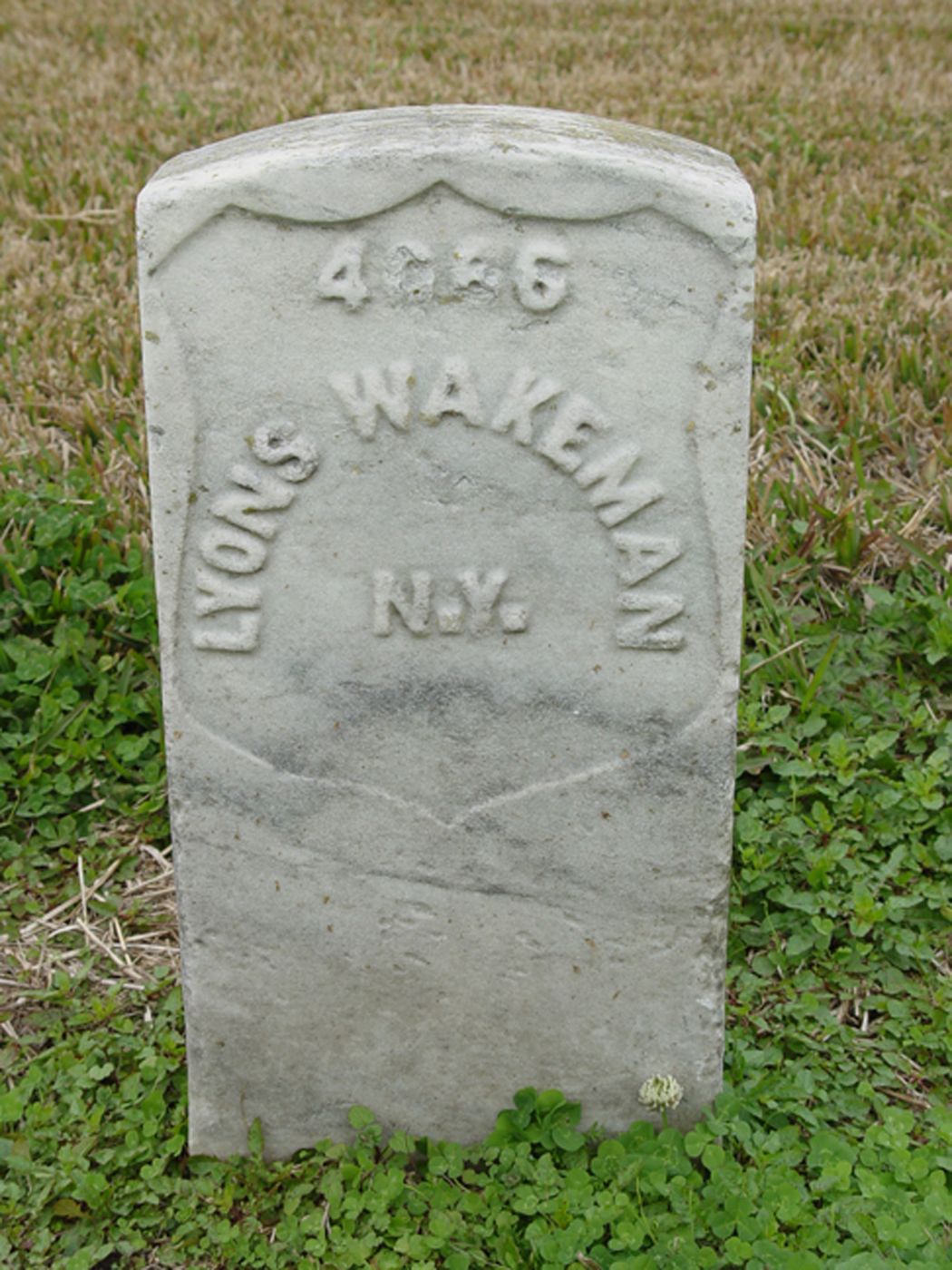
Her grave is one of five stops on the park's free audio tour. Call 504-799-0803 from your phone as you walk, and you'll hear the stories of five soldiers buried here, one from each part of the cemetery's history.
Memorial Day and Wreaths Across America
Twice a year the cemetery fills with people. Before Memorial Day, volunteers and service members place a small American flag at every grave, and the park holds a ceremony.
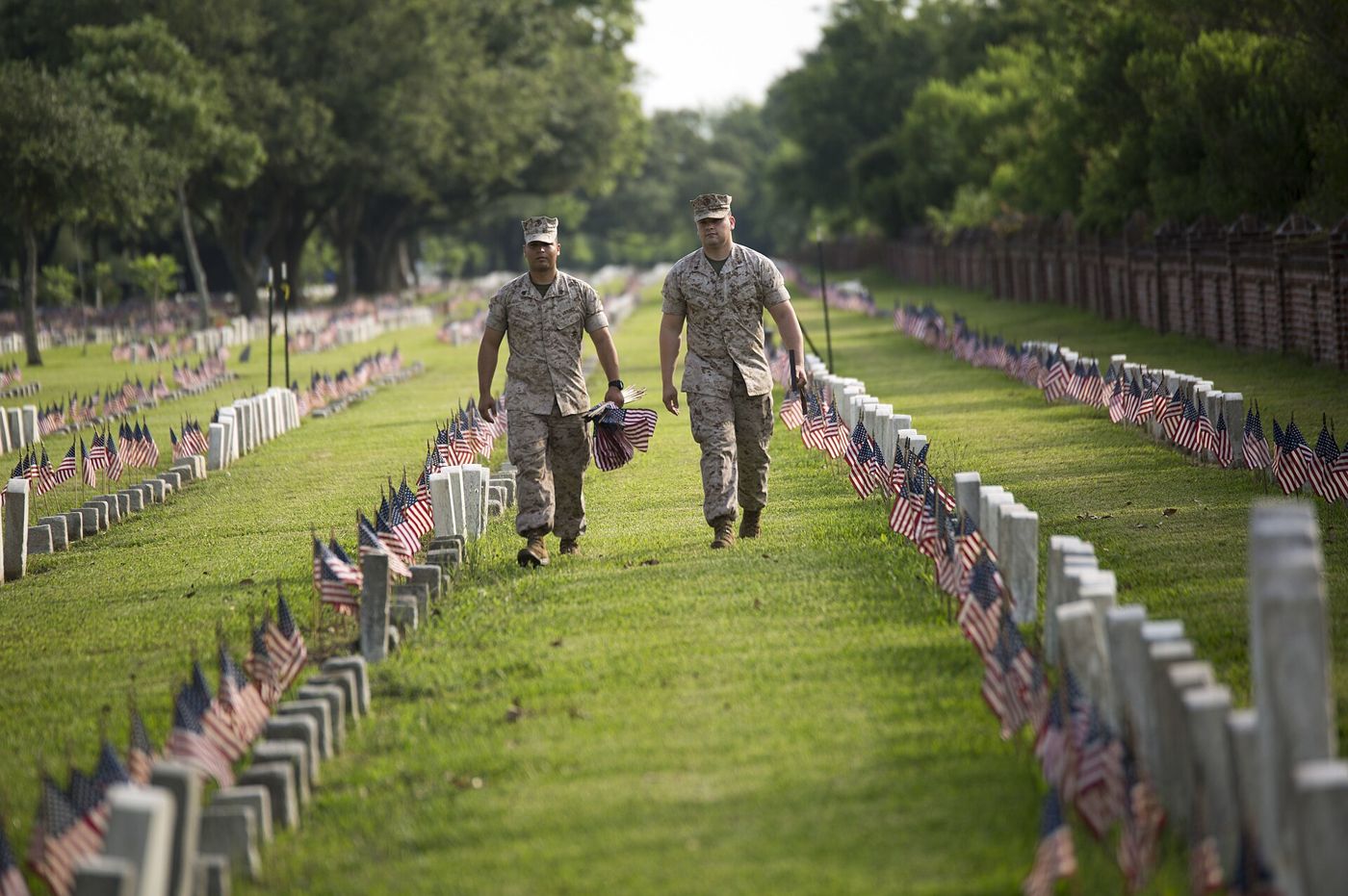
In mid-December, Wreaths Across America volunteers lay a wreath on the graves and say each veteran's name aloud. Both are open to anyone who wants to help, and they're on what's on when the dates are set.
Visiting
The cemetery is open every day, federal holidays included. The gates for cars open in the morning and close in the late afternoon (the park's page has the times), and you can walk in from sunrise to sunset any day of the year. There's no fee.
You can drive in along the road beside the battlefield or walk over from the battlefield's monument and visitor area. Either way, plan on a slow walk: the rows go all the way back to the levee.
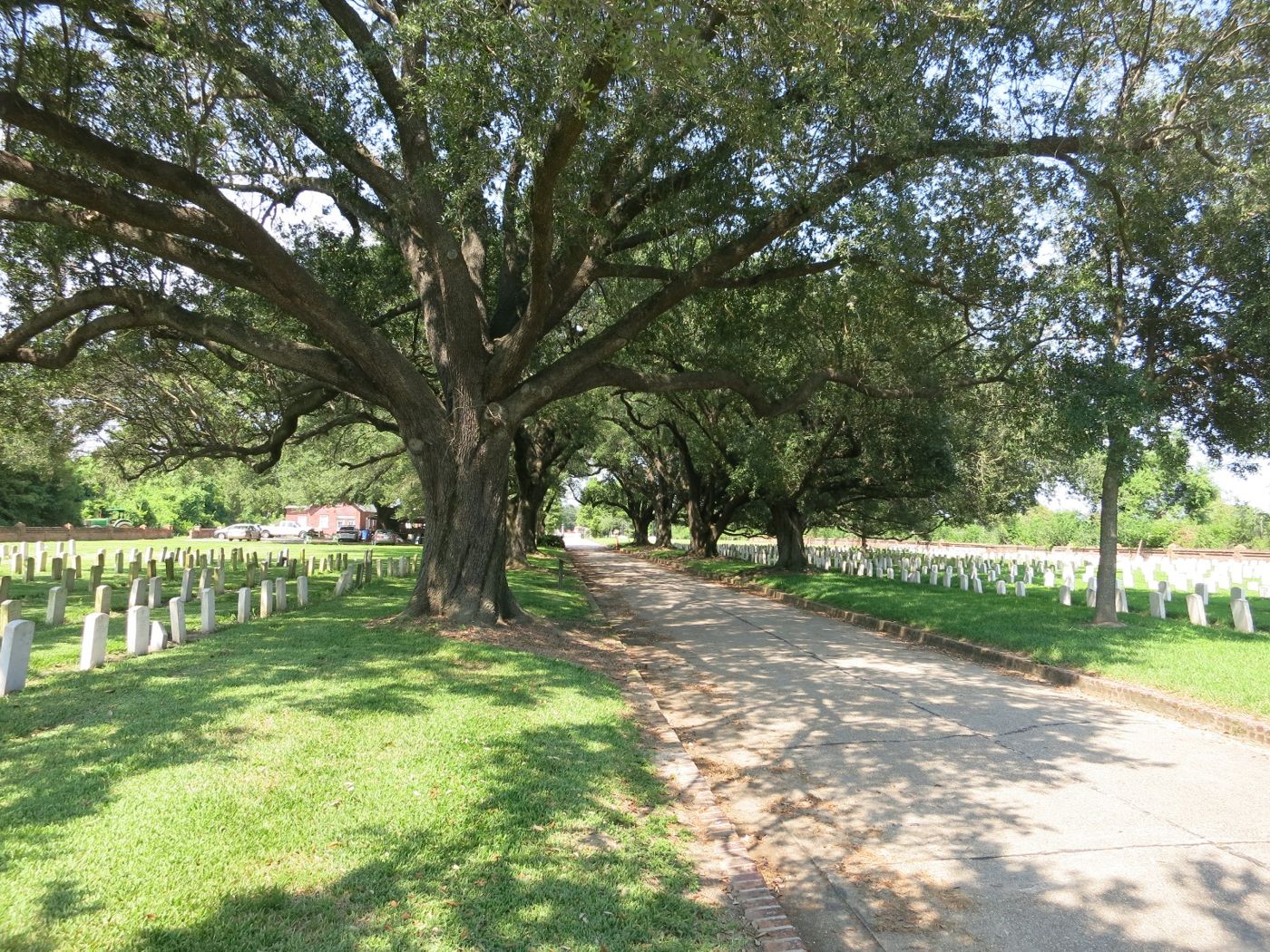
Please remember it's a cemetery. The park asks visitors to:
- leave pets at home (service animals are fine),
- skip picnics, sports, jogging and bike riding on the grounds,
- never use metal detectors or take anything, and
- check the park's rules before leaving flowers or decorations at a grave.
Looking for someone? The park is updating its list of the headstones. If you're searching for a relative, email the park through its website and they'll help.
Getting there
Chalmette National Cemetery is on St. Bernard Highway (Highway 46) in Chalmette, about six miles from the French Quarter, right next to Chalmette Battlefield. A sign on the highway at Military Cemetery Road marks the turn. Make a morning of it: our guide to Chalmette Battlefield covers the rest of the park, and the San Bernardo Scenic Byway carries on down the parish from here.