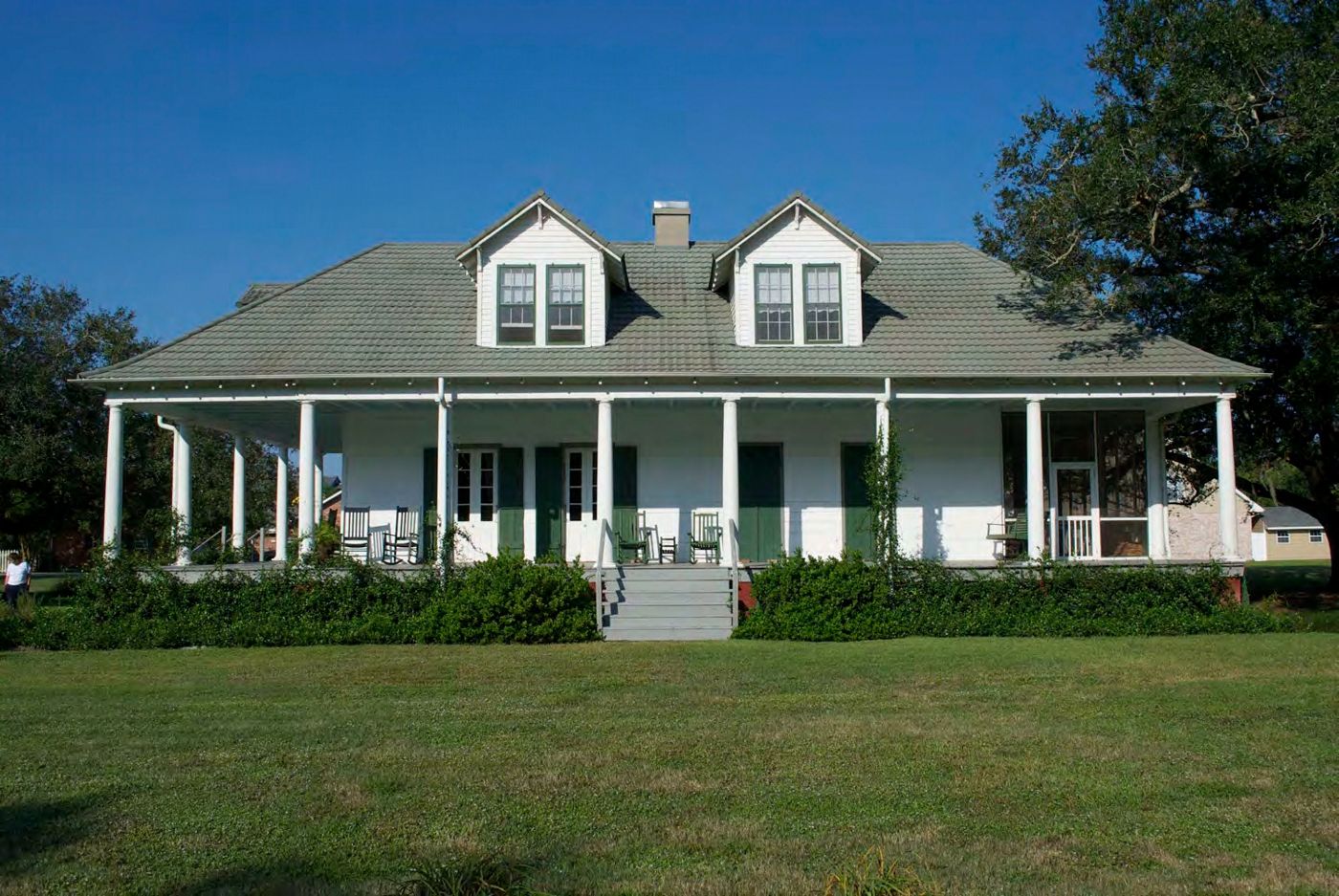

Set back from St. Bernard Highway in Meraux, behind a lawn and a stand of live oaks, is a low white house with a steep roof and a long front gallery. It looks like a lot of old Louisiana houses. It's older than almost all of them: Pecan Grove was built around 1800, and it's one of the very few French Creole houses left in St. Bernard Parish.
Older than the battle
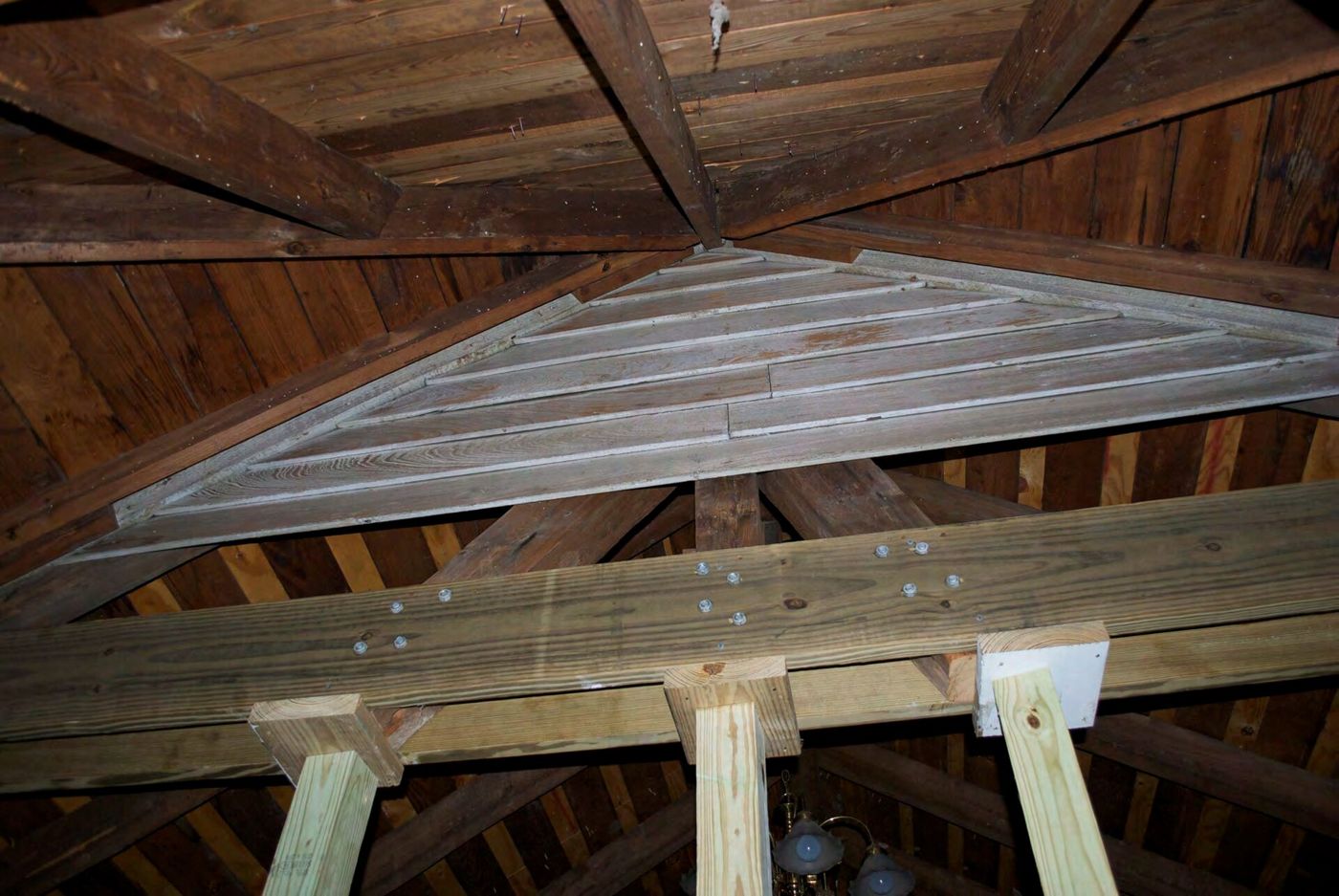
Nobody knows the exact year it went up, but the paper trail is good. The earliest record is an 1805 sale of the property from Jean Mercier to Samuel Young, which already mentions "improvements," meaning buildings were standing. The timbers in the original roof are joined the 18th-century way, with mortise-and-tenon joints held by wooden pegs. Put together, the house most likely dates from between 1795 and 1805.
Ten years later it was on the map, literally. When Major Arsène Latour drew his famous map of the country below New Orleans for General Andrew Jackson in 1815, the house was there, part of the larger Jumonville plantation. It was already standing when the British marched past toward Chalmette.
It was a working sugar plantation then, with an orchard of pecan trees that gave the place its name.
How it was built
Pecan Grove is a Creole cottage, the classic Louisiana colonial house:
- Brick between posts. The walls are a heavy timber frame with the spaces between the posts filled with brick (briquette-entre-poteaux), then covered in clapboard. It's one of the earliest building methods in Louisiana.
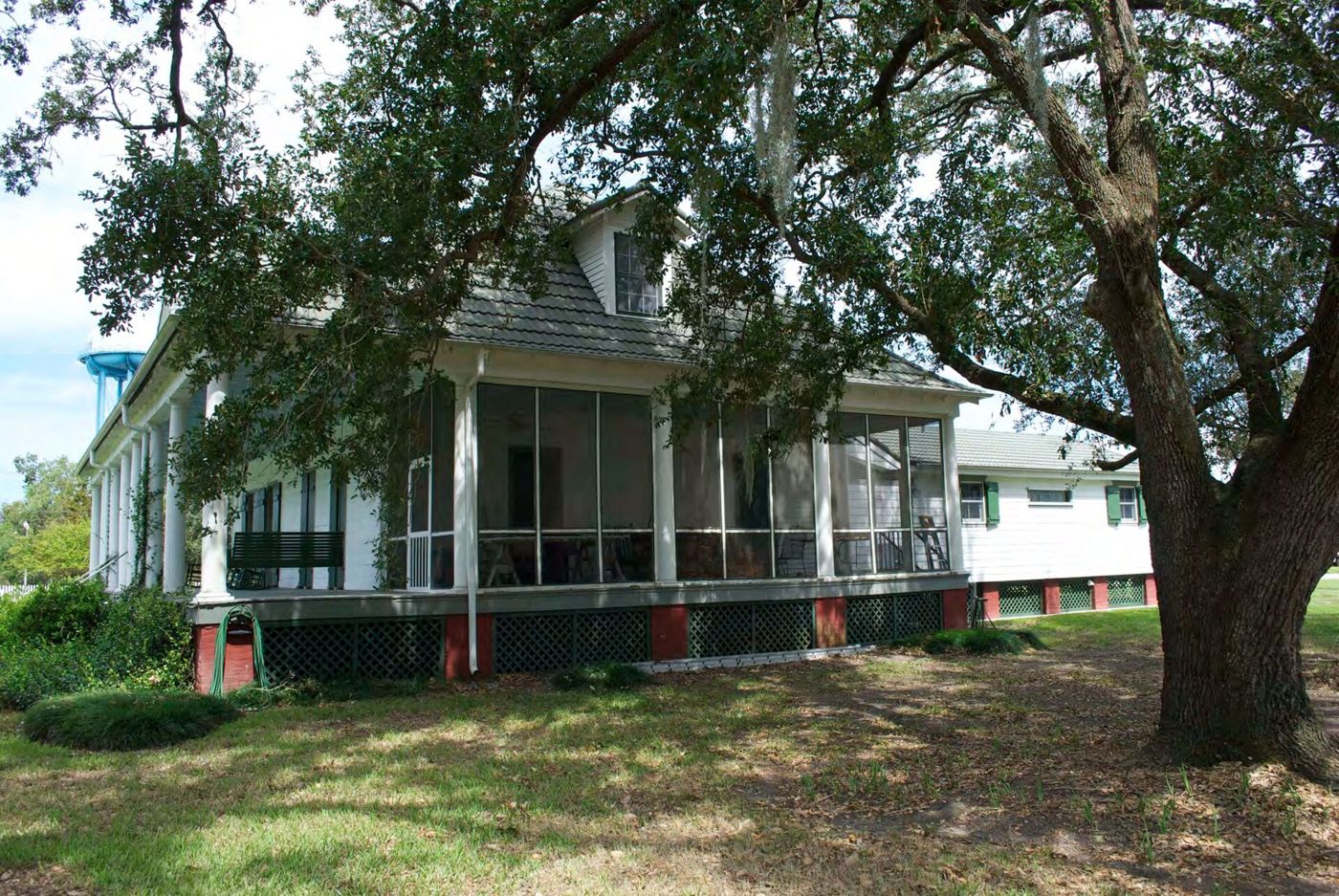
- Up off the ground. The house sits about five feet up on brick piers, out of the damp.
- No hallways. Four big rooms open straight into each other, with small rooms (cabinets) and a loggia across the back, the way French Creole houses were laid out.
- The gallery as a room. The long front porch was treated as an outdoor room, with a beaded wood wall and French doors opening onto it, shaded and catching the breeze.
Inside, the four main rooms still have their original cypress mantels, beaded wood ceilings with exposed beams, and French doors with old wavy glass and their original hardware.
Dragged back from the highway
In the early 1930s the new St. Bernard Highway brought traffic right past the front door. So the owners moved the house, the old-fashioned way: with a mule, ropes and logs, rolling it 200 feet deeper into its own lot. It still faces the same way it always did.
They remodeled it at the same time in the then-popular French Colonial Revival style, stretching the roof into hips over new side galleries and adding the dormers you see today. A rear wing was added in 2003. Up in the attic, the original pegged timbers of the first roof are still there.
Why it matters
French Creole is one of the country's three great colonial building traditions, alongside the British houses of New England and the Spanish missions of the Southwest, and almost every surviving example is in Louisiana. In St. Bernard it has nearly disappeared. A survey of the whole parish in 1982 found only six early 1800s plantation houses, all altered, and the storms since have taken more.
Pecan Grove is one of the handful still standing, with Sebastopol and Kenilworth down on Bayou Terre-aux-Boeufs, Magnolia, LeBeau and the Malus-Beauregard house at Chalmette Battlefield. It went on the National Register of Historic Places in 2013.
Seeing it
Pecan Grove is a private home. You can see it from St. Bernard Highway near Archbishop Hannan Boulevard in Meraux, set far back under its oaks. Please admire it from the road and don't go onto the property.
It makes a good stop on a drive down the San Bernardo Scenic Byway, between Chalmette Battlefield and the Docville oaks in Violet.
Questions people ask
How old is Pecan Grove Plantation House?
It was built around 1800, most likely between 1795 and 1805. The earliest record of the property is an 1805 sale, and the house appears on Latour's 1815 map of the Battle of New Orleans.
Can you tour Pecan Grove?
No. It's a private home. You can see it from St. Bernard Highway in Meraux.
Is Pecan Grove on the National Register?
Yes, since 2013, as one of the last French Creole houses in St. Bernard Parish.
Where is Pecan Grove?
In Meraux, set back from St. Bernard Highway near Archbishop Hannan Boulevard.